Qualtrics
Self-Serve Partner Portal
Turning a minimum two-week bottleneck of manual review and red tape — already tacked onto the end of a partner's build — into a self-serve flow they could complete themselves in 3 days.
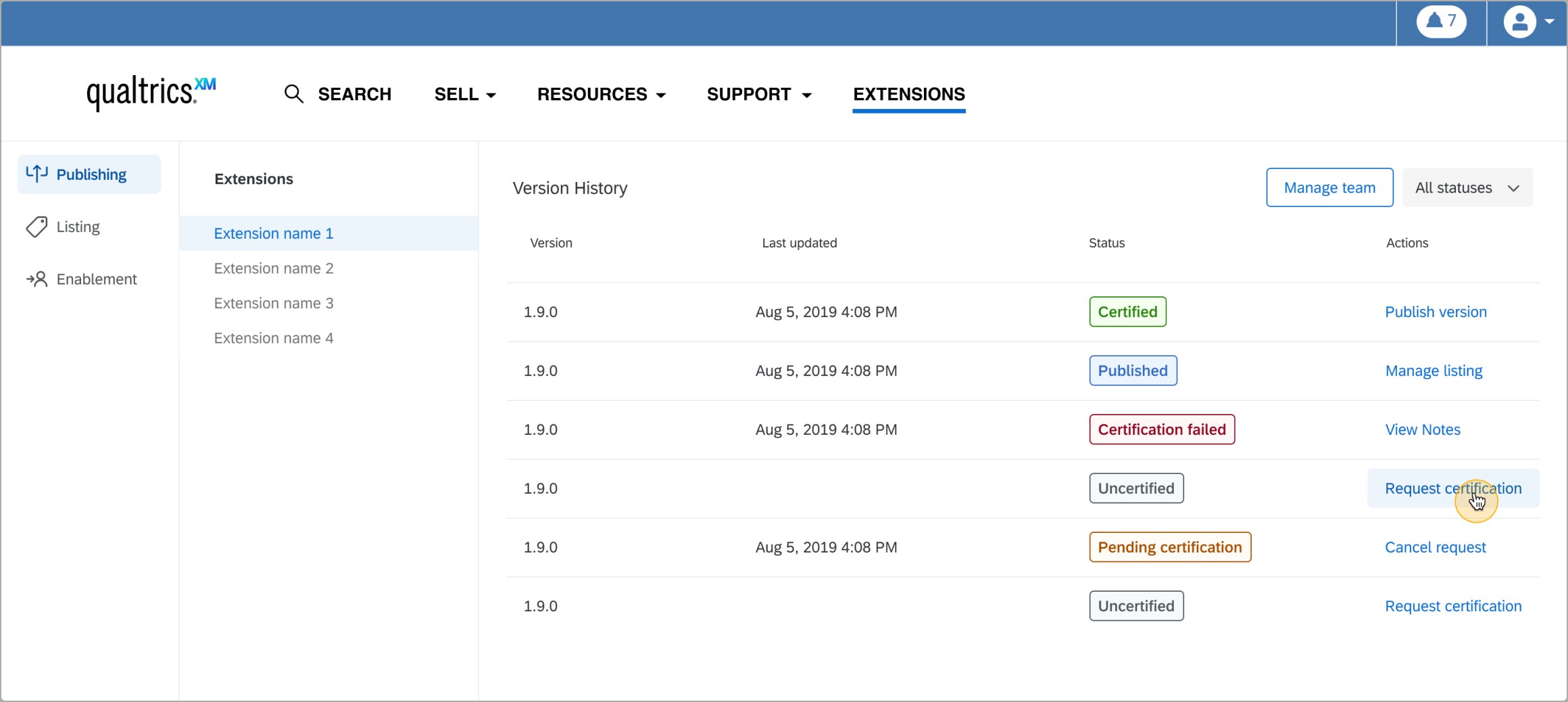
Turning a minimum two-week bottleneck of manual review and red tape — already tacked onto the end of a partner's build — into a self-serve flow they could complete themselves in 3 days.
The problem
In the days before Self-Serve Partner Portal, before a partner could even get listed, an engineer from our team had to manually go through and certify their extension in code. Then, if they wanted it on the Marketplace, they filled out a scrappy Google doc, sent it back and forth for review with our marketing team, filed a ticket with the website team, and sat through office hours. All told, a minimum of two weeks to about a month of red tape and, on our end, an engineer manually checking after the real work was already done.
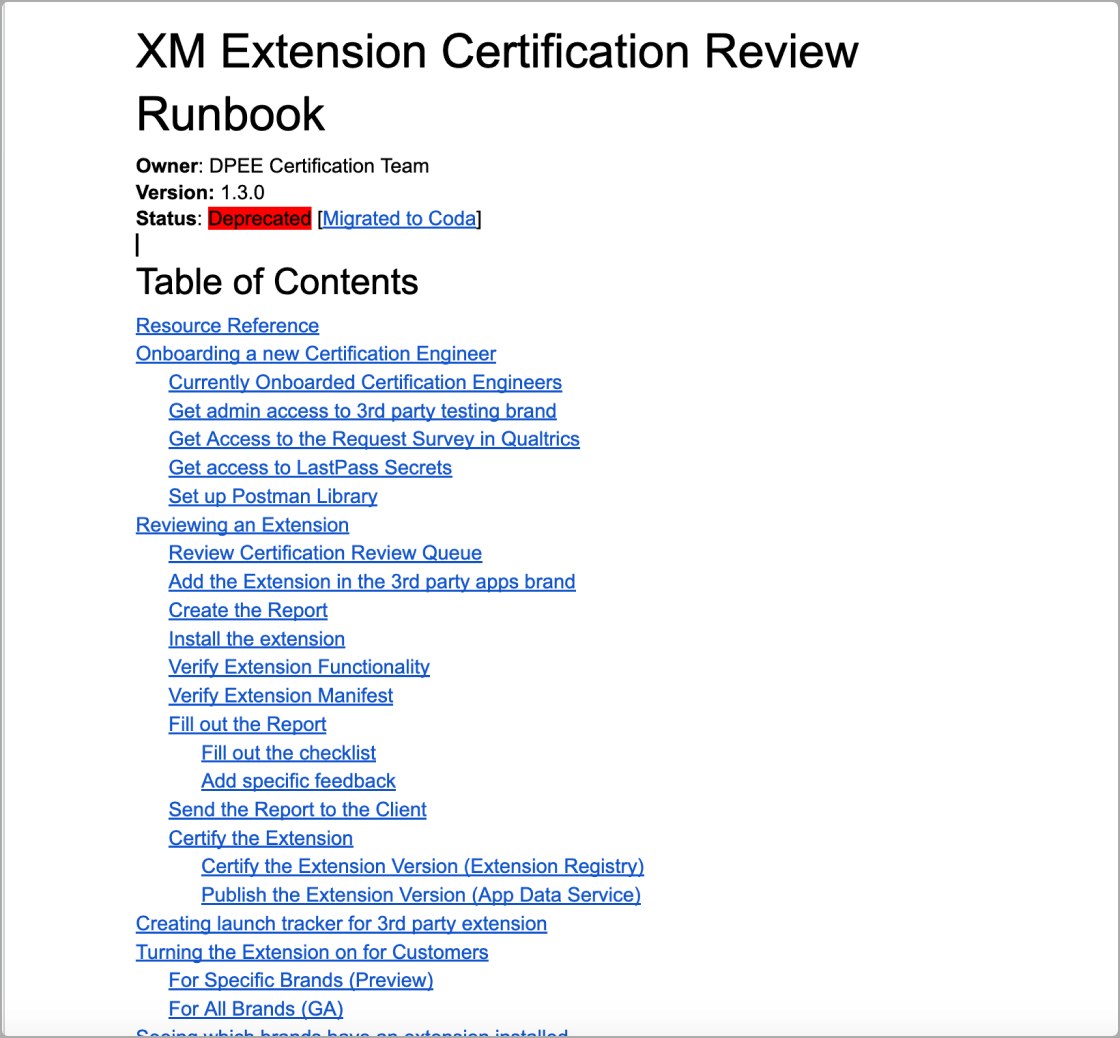
Certification checklist
The user would submit their extension for certification by working with an engineer on our team to make sure that it would be okay to live in the Qualtrics ecosystem.
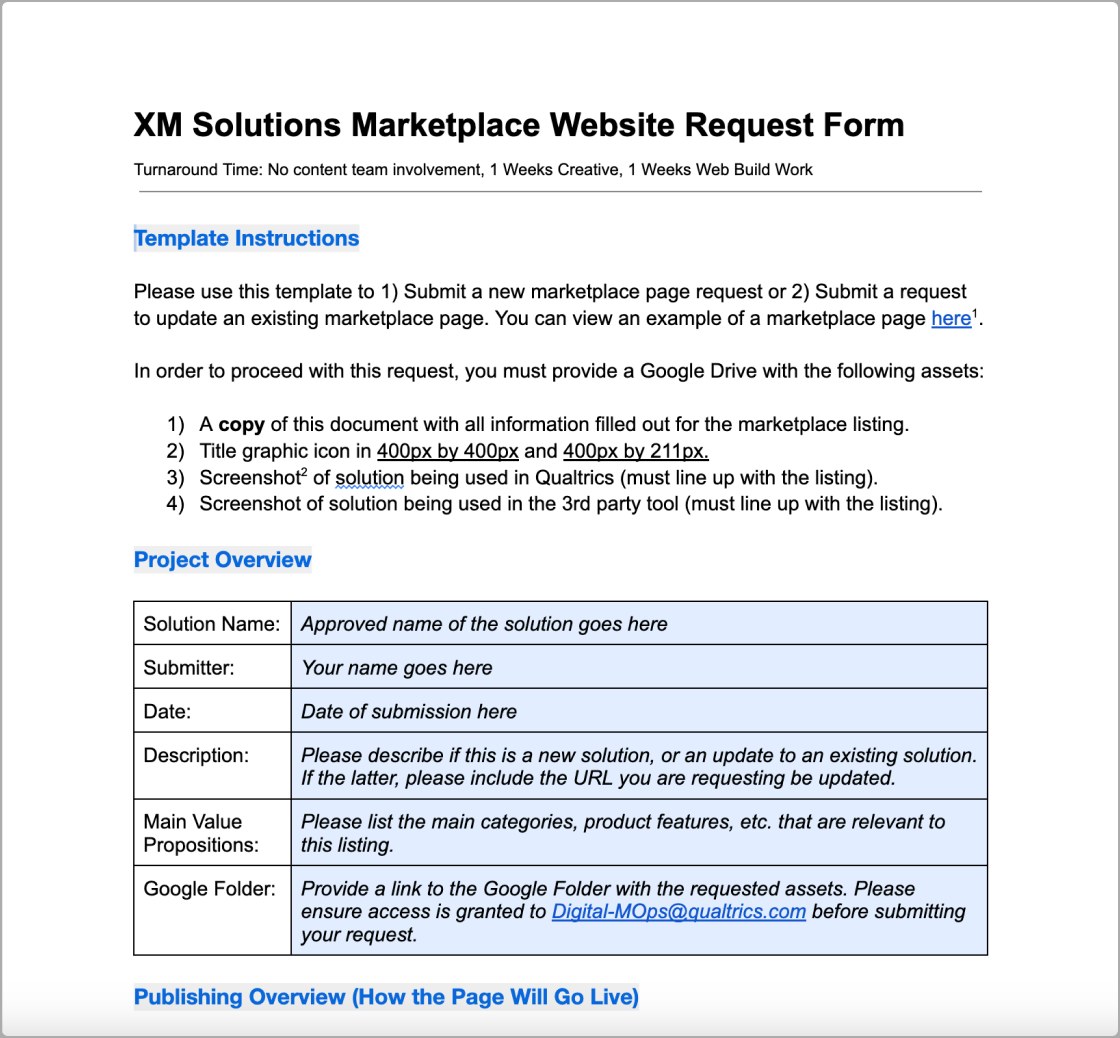
Google doc form for listing to Marketplace
If the user wanted to be able to list their certified extension on the marketplace — which is how they could profit from it — they had to fill out a Google doc with the details.
The problem
That delay wasn't just an inconvenience — it slowed partners' actual ability to do business with Qualtrics. A certified, listed extension was what let it become shareable, which meant real money and exposure for them; every week stuck in review was a week they weren't earning either. It cost our team too: certifying extensions and manually shepherding partners through a Google-doc listing process ate up time that could've gone toward more valuable work.
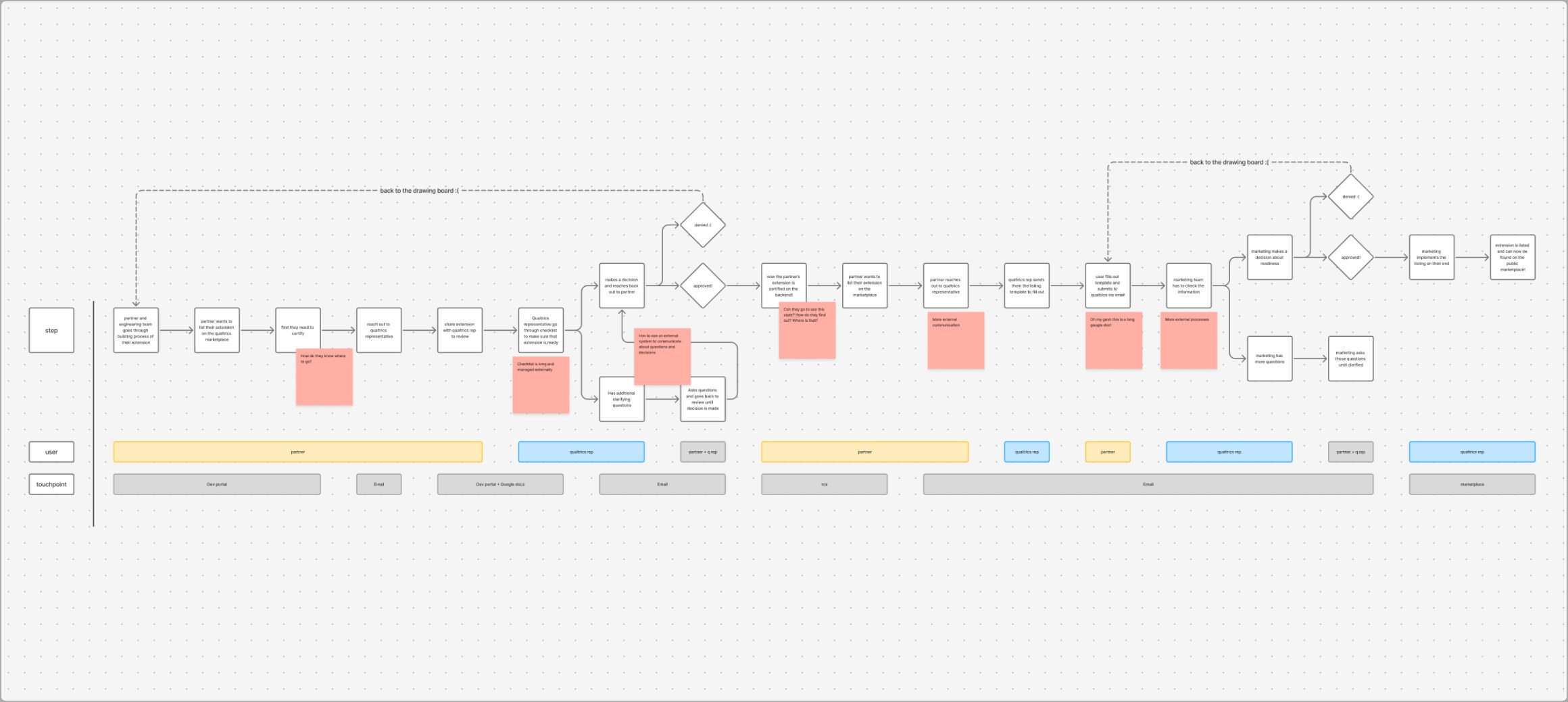
The process was a resource suck on all sides
We wanted to intervene as early in the process as possible to get the ball rolling.
Problem mapping
I started by sitting down with my engineering manager and mapping every state an extension moved through across its lifecycle: what pushed it from one stage to the next, why a partner would actually want their extension certified or listed, and how many hands and touchpoints it passed through along the way. That mapping pointed to certification and listing as the two stages worth redesigning first.
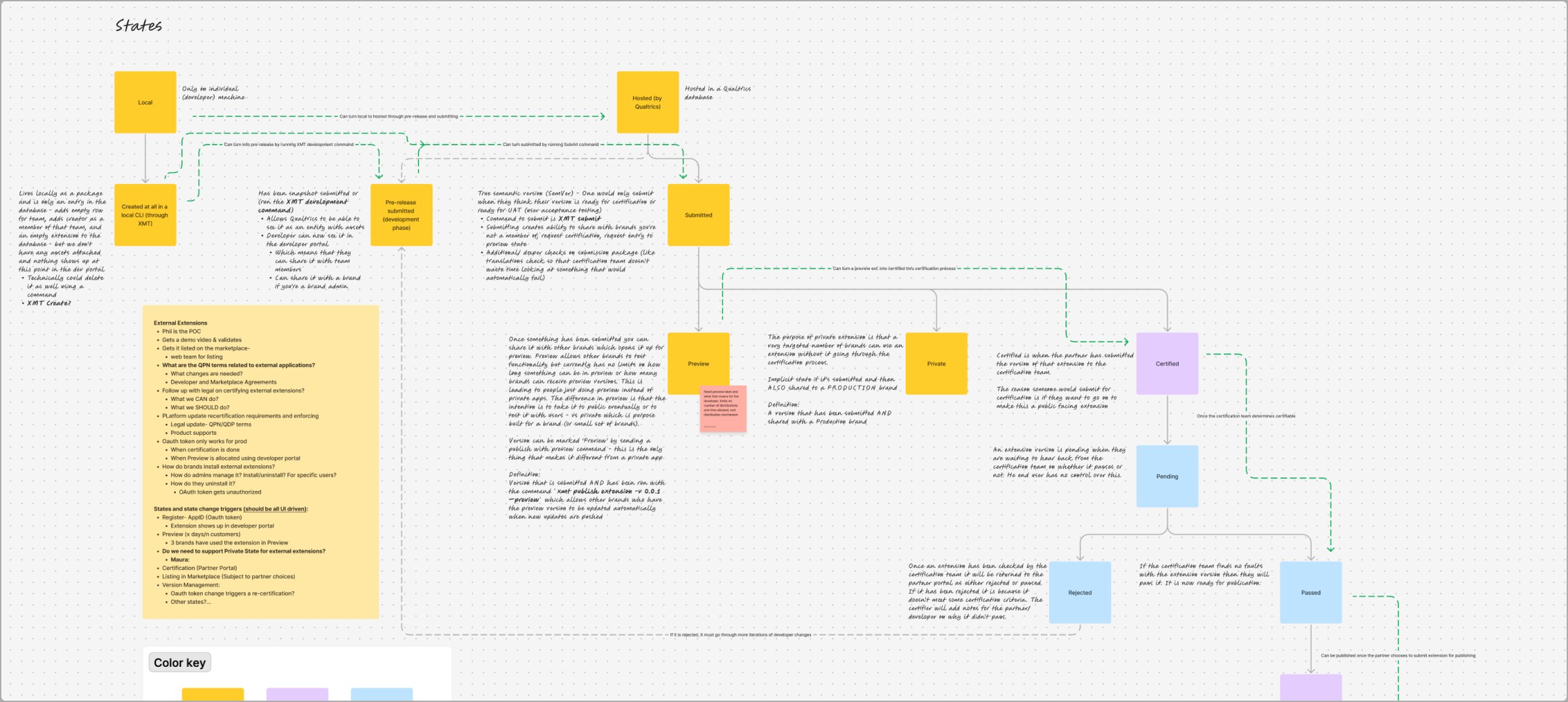
Lifecycle mapping
Mapped every state an extension moves through, what pushes it forward, and how many hands it passes through.
3 touchpoints → 1 touchpoint
One thing I noticed when mapping the states was that the user had to move between 3 different surfaces to do something that could (and should) be done in one. For this reason, we decided to use the Partner Portal as the place where all these workflows could happen. Our solution was built as an iframe through Impartner, the same platform partners already used to manage their other Qualtrics business. This meant that the workflows for certifying and listing an extension would live right alongside everything else they came there to do. The extension marketplace itself, where certified extensions are publicly listed, is a separate site; my scope was the Partner Portal experience that fed into it.
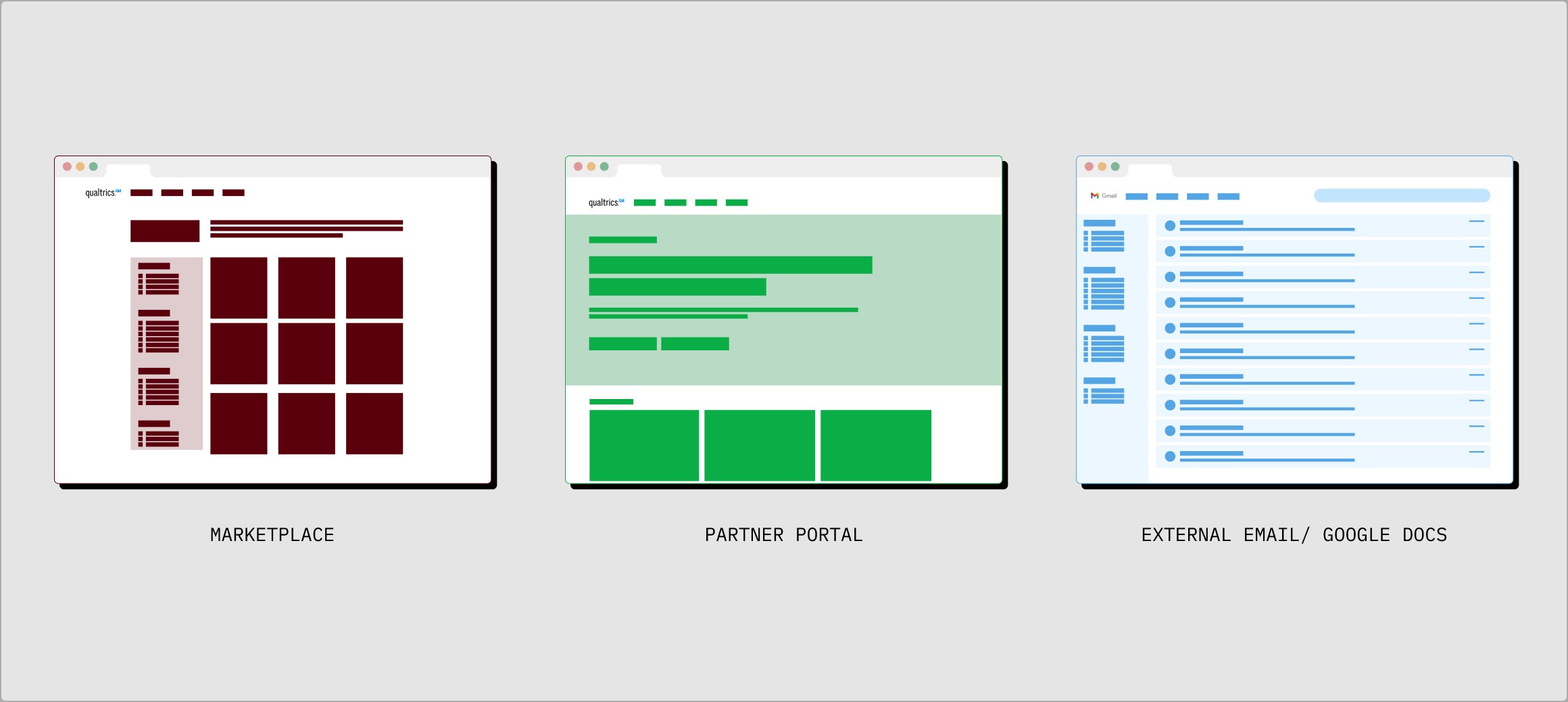
Partner Portal (Impartner)
Certification and listing live together, in the same iframe-based portal partners already used.
Early designs
I started with certification: designed a new certification portal, then validated the direction with partners, who responded well to it. I also sat down with the engineers who ran the manual certification checklist to understand exactly what it covered, so we could fold as much of it into the new portal (and automate as much of it as possible). Listing came next, aimed at the same goal: cutting a process that could stretch out over weeks of manual back-and-forth down to something partners could push through themselves with easy-to-understand state changes and review processes.
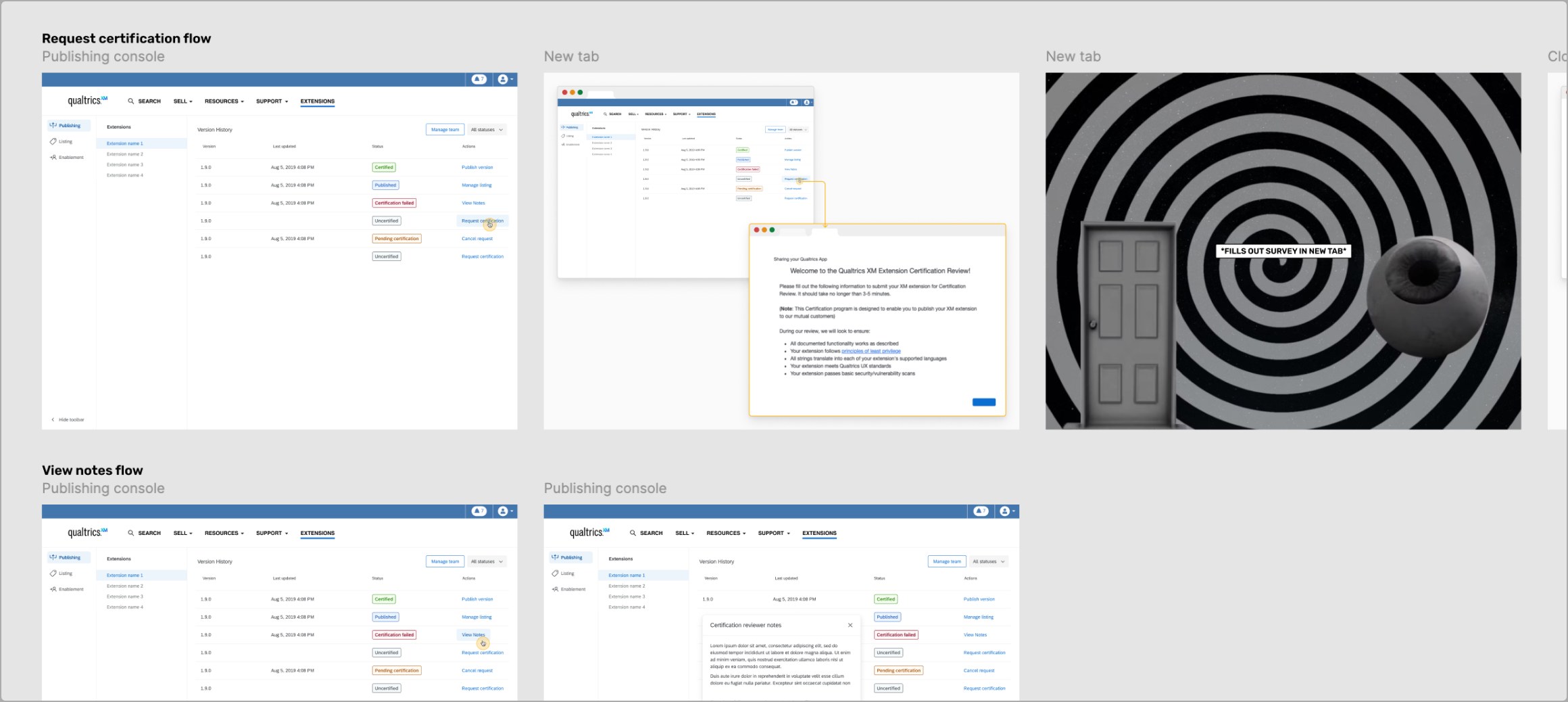
Certification portal
Automated as much of the manual certification checklist as possible, validated with partners.
The outcome
Partners can now get certified and create their own marketplace listings directly through the Partner Portal in 3 days, cutting a manual, multi-week process — spread across Qualtrics reps, the partner, and their engineers, after the real build work was already done — down to 3 days until partners can start earning.
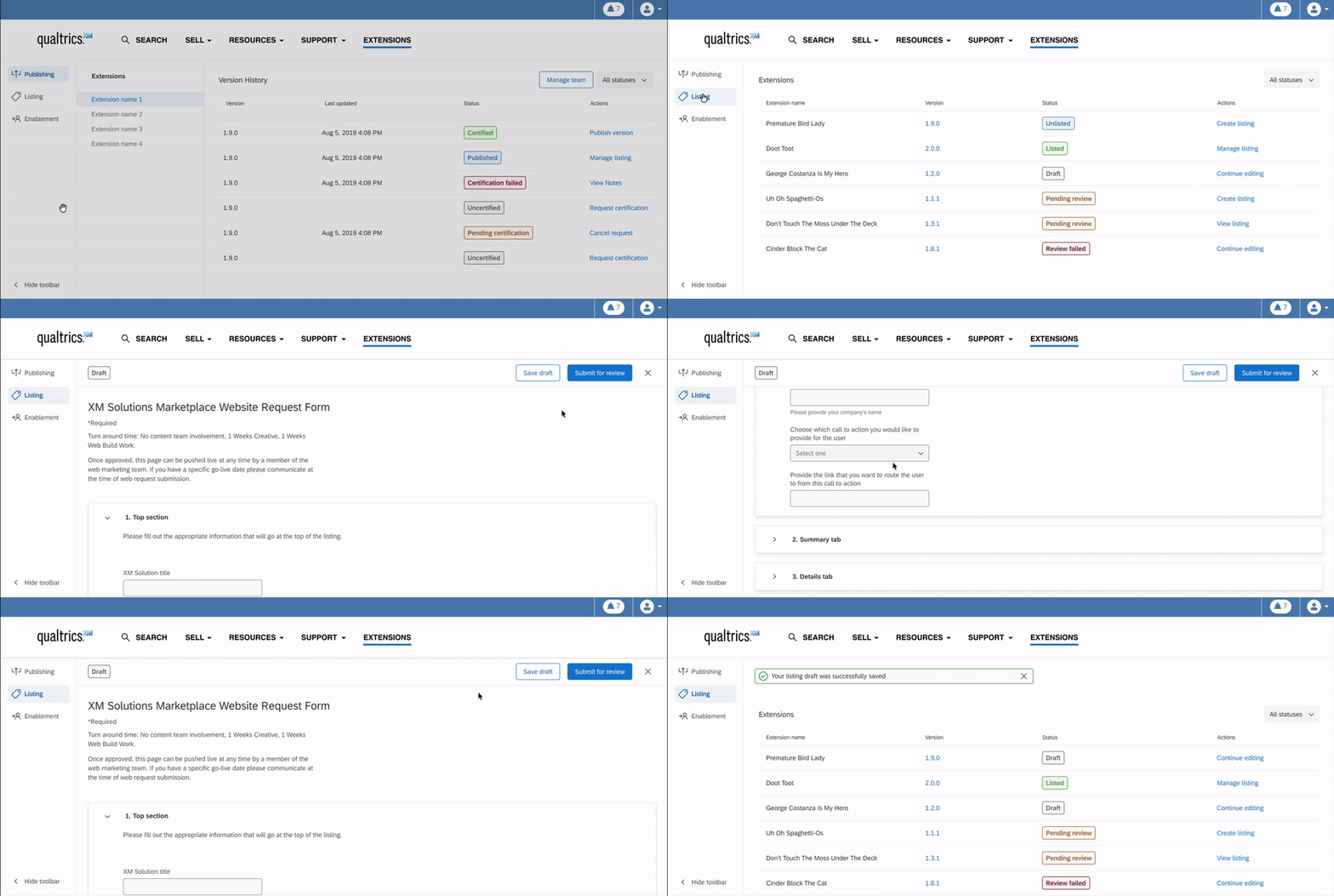
Self-serve certification & listing
All in one place!